At Bedrock, we work closely with multigenerational families and understand that each generation approaches wealth differently. Our philosophy, We all see wealth differently, reflects the belief that stewardship evolves as perspectives, responsibilities and opportunities change over time.
Inheriting the Future is a new Bedrock series exploring how the next generation is navigating that responsibility in an era of rapid technological and societal change. Written by Bedrock Advisory Board member Kydd Boyle, founder and CEO of Horizons and a member of a fifth-generation family business, the series offers a candid perspective shaped by his experience as an entrepreneur, investor, next-gen, and father.
In the opening essay, Kydd reflects on a recent Horizons trip to Silicon Valley and the emerging Intelligence Revolution, considering what this moment of technological acceleration may mean for investors, families and the generation now inheriting the future.
Essay #1: Parenting With Situational Awareness
San Francisco is a looking glass into the future.
Each year I take a group of Horizons investors to Silicon Valley to meet founders building at the technological frontier. It has become an annual pilgrimage. We go not just to see companies, but to glimpse what is forming before it becomes obvious.
Ten years ago the mood was expansive. We were watching the aftershocks of Facebook, Instagram, PayPal and LinkedIn ripple through the ecosystem. Software was eating the world. Founders with laptops were building SaaS businesses and chasing unicorns. You left uplifted. A person with a laptop could take a bite out of the universe.
This year felt different.
In one meeting a founder calmly suggested that within a decade robots will be policing our streets. In another, a leading investor admitted he was deeply concerned about social cohesion given the unemployment the very technologies they were funding could drive. The room nodded at both ideas. These were not science-fiction hypotheticals. They were product roadmaps.
The usual awe I feel leaving San Francisco was replaced by something heavier. Not anxiety about markets. Anxiety about meaning. About purpose. About my children.
Humanity has been shaped by four great revolutions.
The Scientific Revolution (1540–1700) taught us that the universe runs on mathematics, not mythology. The Industrial Revolution (1760–1914) replaced muscle with machines and reorganised society around capital. The Information Revolution (1950–2015) annihilated distance and placed the world in our pockets.
Now the Intelligence Revolution (2012 onwards) is industrialising cognition itself. Machines are learning to reason, generate, create and occasionally out-argue us.
For those of us born in the 1980s, this is our second revolution in quick succession. We grew up with landlines and atlases. We remember boredom without screens. We remember life before Google.
We went from “don’t believe everything you read on the internet” to “the internet writes better emails than me” in about twenty years.
This time the target is intelligence itself. The very trait that has separated us from every other species.
Leopold Aschenbrenner argues this moment demands situational awareness. The AGI race is real. The geopolitical stakes are significant. The pace of progress is poorly understood outside a narrow technical community.
Dario Amodei has suggested systems that exceed Nobel Prize winners across many domains could emerge within years. Peter Diamandis argues that by 2035 abundance could become routine — energy, health, education and legal services resembling utilities. Geoffrey Hinton warns there is a meaningful probability of existential risk within decades.
Between utopia and catastrophe lies uncertainty.
As an investor, I can process that analytically. As a father, it lands differently.
If intelligence becomes abundant, what becomes scarce? If machines perform tasks that once dictated income and status, what anchors identity? If dystopian outcomes are possible, what responsibility do we bear to prevent them?
My answer has become the inner game and the outer game.
The Inner Game
The inner game is character under pressure.
Marcus Aurelius wrote that each day is a kind of micro-death. Roles dissolve. Status fades. Certainties collapse. In an AI economy this becomes practical, not philosophical. Some skills will reprice to zero. Some titles will inflate briefly, then disappear.
Clinging to yesterday’s edge is a losing strategy.
If part of your professional identity is dying, let it die cleanly. Reallocate energy. Adapt faster than your peers.
Technology generates options. It does not assume responsibility for choosing among them. Humans still deploy capital, hire teams, sign documents and absorb consequences. Judgment formed through lived experience and accountability remains difficult to automate.
Composure, adaptability and moral clarity when incentives are noisy — that is the inner game.
The Outer Game
The outer game is positioning within a power shift.
Every revolution changes what the market rewards.
The Scientific Revolution rewarded mathematical reasoning. The Industrial Revolution rewarded capital and engineering. The Digital era rewarded network builders and software scale.
The Intelligence Revolution is likely to reward three things:
Fluency working alongside advanced systems. Sound capital allocation when narratives outrun fundamentals. Trusted human networks in a world flooded with synthetic output.
When information is abundant, trust becomes scarce. When output is infinite, taste becomes valuable. When analysis is automated, conviction under uncertainty matters more.
Humans will still decide how this technology is deployed. We still have agency.
For my children, this means cognitive flexibility, deep literacy, emotional intelligence and resilience. AI scales information. It does not automatically scale courage, responsibility or character.
The inner game keeps you steady. The outer game positions you where value is moving.
The Rational Case for Optimism
Situational awareness should not collapse into fatalism.
Pessimism often sounds intelligent in the moment. Luddites smashed textile machines to protect their livelihoods. Critics of the printing press feared social destabilisation. They were not foolish. They were early.
Over time literacy expanded. Productivity soared. Living standards improved. If you consistently bet against transformative technology, you may feel sophisticated for a while. Then you tend to be wrong.
The long-term base rate favours progress. Life expectancy has more than doubled in two centuries. Extreme poverty has significantly reduced. Each technological wave has disrupted labour markets, but over time it has expanded human capability.
Marc Andreessen recently described AI as the philosopher’s stone. It takes sand, the most common substance on Earth and turns it into the rarest substance: thought. We etch logic into minerals and distribute it globally. That is extraordinary.
Optimists build more. They invest more. They take intelligent risks. In systems with asymmetric upside, that behaviour compounds.
San Francisco still offers a glimpse of what is coming. This year that glimpse felt heavier. More consequential. But revolutions are always unsettling in real time.
The task is not to retreat from the frontier, nor to surrender to hype or despair. It is to remain clear-eyed. To build inner resilience and outer optionality. To teach the next generation that while tools evolve at astonishing speed, the fundamentals of character, courage and judgment endure.
Situational awareness is not about fear. It is about responsibility.
And optimism, chosen deliberately, remains one of the most rational strategies we have to deal with this responsibility well.
A Final Thought
At the weekend I watched my son Kasper building a fort from sticks in the park. We were disconnected from technology. It was pure joy watching his imagination at work, solving problems with nothing but wood, mud and intent.
Human intelligence is not just computation. It is curiosity. Play. Meaning. Presence.
Whatever systems we build, whatever machines we deploy, life will still be defined by moments like that.
The frontier matters. But so does the fort.
More reflections to come soon.
To learn more about Bedrock’s multigenerational approach to stewardship and family strategy, please reach out to: info@bedrockgroup.com
Biography
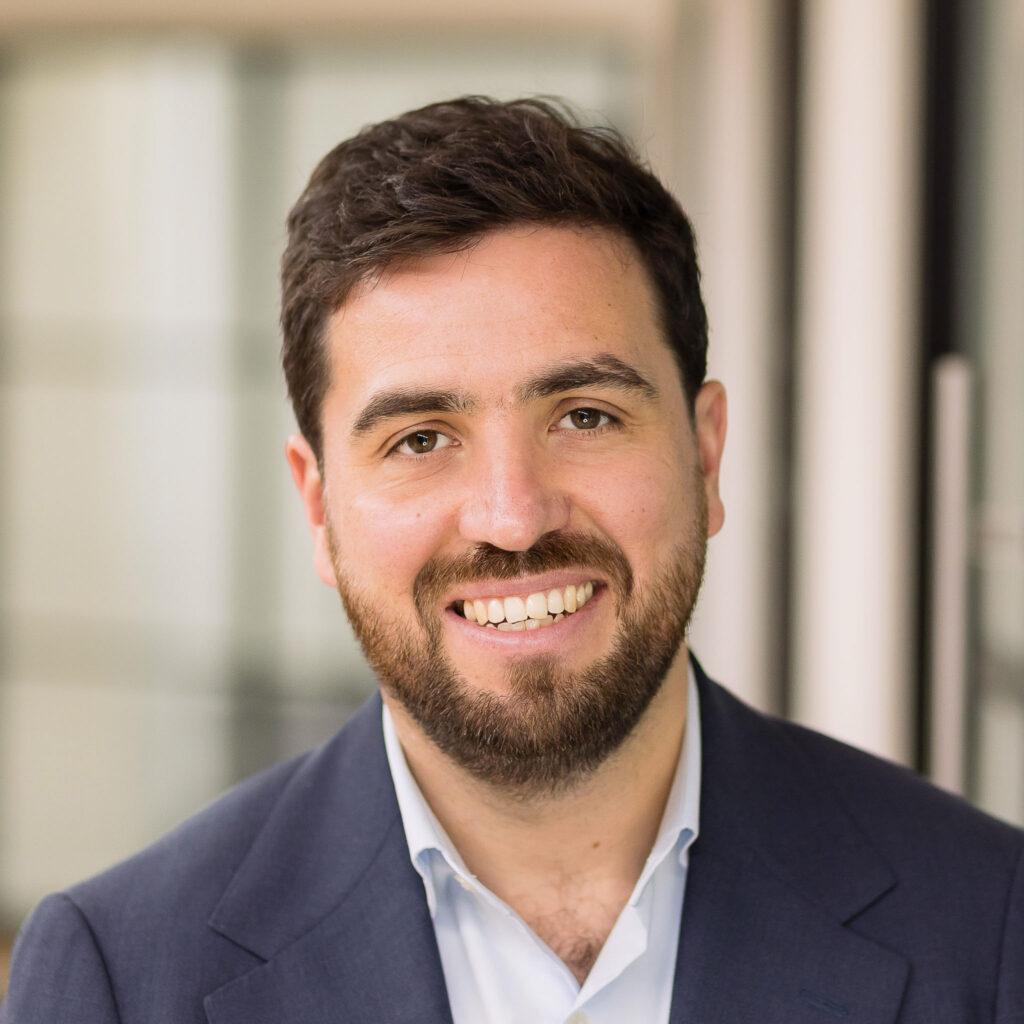
Kydd Boyle is the Founder and CEO of Horizons, a global network of 150 millennial founders and investors representing over £200 billion in assets. Horizons exists to connect a rising generation of capital allocators and entrepreneurs by expanding each other’s horizons through curated gatherings and shared experiences.
The community hosts in-person forums featuring leading investors, entrepreneurs, creatives and athletes. Past speakers have included Bill Gates, David Rubenstein, George Russell, David Cameron and Mira Murati.
Kydd comes from a fifth-generation family business and sits on his family office’s board. He also serves on the advisory board of Bedrock Group.
Photo credit: Louise Rose Photography
Important Legal Information
The views presented in this article are Kydd’s own views and might not necessarily reflect the investment approach of Bedrock Group. This discussion does not represent an investment advice and is intended for information purposes only.
For Professional or Institutional Investors Only. Certain statements included within constitute ‘forward-looking statements.’ These statements, which may include words like ‘believes,’ ‘expects,’ or similar expressions, are subject to numerous risks and uncertainties. Actual results may differ materially.
The content of this document has been prepared by Bedrock S.A., Bedrock Monaco SAM, and Bedrock Asset Management (UK) Ltd. (jointly, hereafter, “Bedrock”).
The information and opinions contained in this document are for background information and discussion purposes only and do not purport to be full or complete. No information in this document should be construed as providing financial, investment or other professional advice.
The information contained herein is intended for the sole use of the recipient and may not be copied or otherwise distributed or published without the express consent of Bedrock. Although the information contained herein has been established by Bedrock based on or by reference to sources, documents and systems it believes to be reliable and accurate, Bedrock does not guarantee its accuracy or completeness and assumes no responsibility for any losses that may arise from the use of this information. The views and opinions expressed herein are based on current market conditions and are subject to change without notice. No representation is made that any forecast or projection will be realised.
Information included in this document is intended for those investors who meet the definition of Professional Client under the Swiss FinSA regulation as well as Professional Client or Eligible Counterparty under the UK Financial Conduct Authority.
Confidentiality
This presentation and the information contained herein are confidential. Each copy of this presentation is addressed to a specifically named recipient and shall not be passed on to a third party. By its acceptance hereof, the recipient agrees to keep the presentation and its contents strictly confidential and may not disclose or divulge any information contained herein to any other person. This presentation cannot be published, copied, reproduced or distributed in any manner whatsoever. The recipient will use this presentation for the sole purpose of obtaining a general understanding of the business, operations and financial performance of Bedrock in order to make a decision as to whether the recipient should proceed with a further investigation of the Funds and this investment opportunity. Bedrock reserves the right to request the return of this presentation at any time, without the retention of any copies by the prospective investor.
Investment Risks
The value of all investments and the income derived therefrom can fluctuate due to market movements and you may not get back the amount originally invested. In the case of overseas investments, values may vary as a result of changes in currency exchange rates. This may be due, in part, to exchange rate fluctuations in investments that have an exposure to currencies other than the base currency of the portfolio. Past performance is no guide to or guarantee of future performance. Investments in fixed income carry risks including credit risk, interest rate risk, and liquidity risk. The value of investments can go down as well as up, and you may not get back the full amount invested.
Limitation of Liability and Indemnity
Bedrock expressly disclaims liability for errors or omissions in the information and data contained in this document. No representation or warranty of any kind, implied, expressed or statutory, is given in conjunction with the information and data. Bedrock accepts no liability for any loss or damage arising out of the use or misuse of or reliance on the information provided including, without limitation, any loss of profits or any other damage, direct or consequential. You agree to indemnify and hold harm less Bedrock and its affiliates, and the directors and employees of Bedrock and its affiliates from and against any and all liabilities, claims, damages, losses or expenses, including legal fees and expenses arising out of your access to or use of the information in this presentation, save to the extent that such losses may not be excluded pursuant to applicable law or regulation. Any opinions contained in this presentation may be changed after issue at any time without notice.
Copyright and Other Rights
The copyright, trademarks and all similar rights of this presentation and the contents, including all information, graphics, code, text and design, are owned by Bedrock.
Governance is often defined by the structures, processes and decisions that help families preserve wealth, navigate complexity and maintain continuity across generations. However, governance is not only expressed through formal frameworks relating to wealth and family business operations. It also exists in the people and systems that support daily family life. As family life has […]
In our latest Inheriting the Future essay, Bedrock Advisory Board member, Kydd Boyle, explores four lessons from some of Europe's most enduring family businesses on innovation, identity and thriving across generations.
Legacy is about more than the transfer of wealth. Jamie Hurkmans-Yuenger reflects on why narrative is an essential part of continuity, helping families preserve identity, share values and create a deeper sense of connection across generations.