
August Market Update 2026
This month, we discuss the limited effectiveness of the US Treasury Market intervention, rising prospect of rate hikes, and recovering equity markets led by big tech.

Historically, the role of female principals was mainly shaped, and constrained, by inheritance or marriage. Today, principalship has gone beyond those arenas and is increasingly earned, authored, and owned.
Whatever the route to female principalship, the result is a profound and empowering shift in how it is being lived and led. Increasingly, women are stepping into positions of authority over capital and enterprise not only more visibly, but more intentionally shaping decisions from the outset, defining their own approach to leadership, and building communities around shared experience rather than operating in isolation.
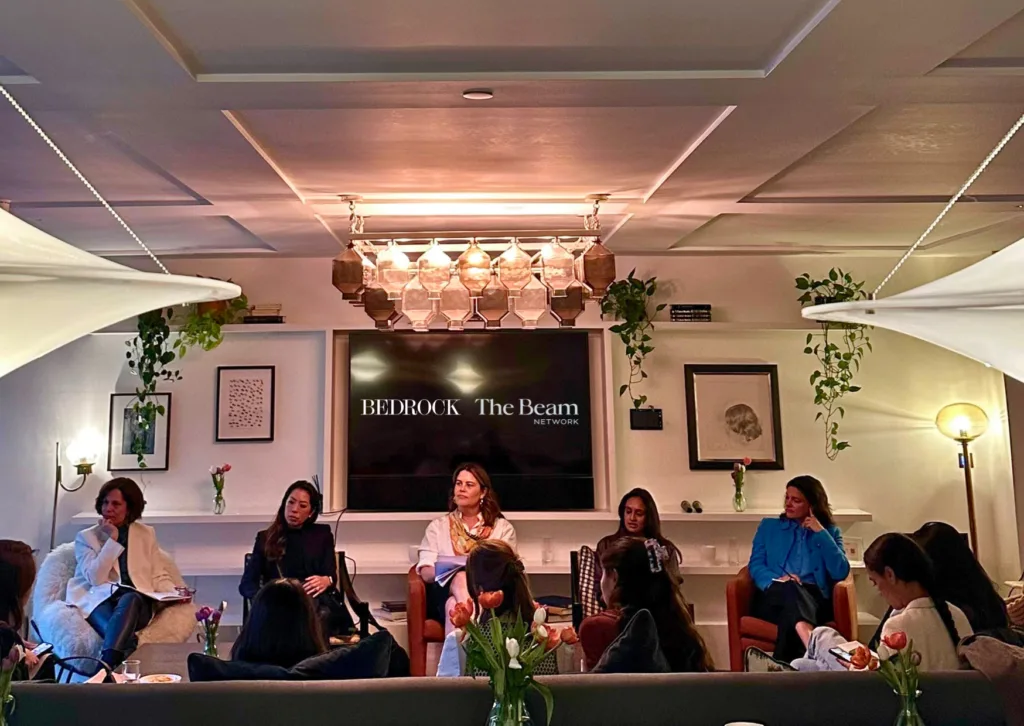
It was this shift, both in how it is unfolding and how it is being experienced in practice, that brought us together for a recent evening with The Beam Network to explore what it means to lead with wealth, family enterprise, and capital through a female lens.
The conversation, moderated by Sarah Thorpe Scott, our Coach-in-Residence and founder of Thorpe Scott Coaching & Advisor, brought together a panel of women who have each taken a different path into leadership with wealth.
From entrepreneurship to philanthropy, family enterprise to community-building, their experiences reflect the breadth of what modern principalship can look like.
Vivien Wong, co-founder of Little Moons, built a B Corp from her kitchen table into a £60M business across 38 countries; Louisa Brassey, co-founder of Greenwood Place, a strategic philanthropy platform working with 32 families; 6th generation Heineken family member who serves as a non-exec on the Heineken board; Shivani Pathak, a G2 entrepreneur and executive coach, who is an active steward of her family’s capital; and Nicky Black, CEO of The Beam Network, supports a global community of women navigating these exact dynamics.
Together, they offered a powerful reflection of the many ways women are stepping into, and shaping, leadership with wealth today.
Throughout the discussion, several themes emerged across the room, reflecting collective perspectives on what female principalship looks and feels like today.
We often see that the challenge is not simply how to lead with or manage wealth, but how to do so within an existing set of expectations about what “good” looks like.
Both the panel and individuals in the room spoke of moments where they questioned whether they were approaching wealth “correctly”. Being in rooms where others were focused on growth, direct investing, and bold decisions, while instinctively wanting to prioritise preservation, understand downside, or take a more measured approach, often created a sense of being out of step.
In some cases, that difference initially felt like a gap in knowledge or confidence. Over time, however, it became clear that it wasn’t a lack of capability, but a different lens.
One speaker reflected on being labelled as the person who “always asked about risk”; something that, at the time, made her feel as though she wasn’t asking the “right” questions, but later proved to be exactly what was needed given her focus on preservation.
What emerged was that leadership with wealth does not follow a single model. It requires understanding what matters to you, even when it differs from those around you, and having the confidence to trust your own instincts and voice, to ask the questions that matter to you, and to hold that conviction without diluting it to please others.
For many, stepping into principalship means engaging with decisions that have already been made and deciding whether to continue them.
Leadership, in this sense, means recognising when inherited strategies no longer align with your own goals and priorities, and having the confidence to reshape them. This can mean creating a new legacy, one that can be just as valuable, if not more so, than what was inherited.
One person shared the experience of gradually reshaping a family portfolio over a number of years. While the existing approach had been successful, it did not reflect the next generation’s interests or practical realities, particularly where investments were concentrated in areas they were less able to engage with.
Rather than rejecting it outright, the process involved demonstrating a willingness to learn, while being clear that the current model was not one they could sustainably lead into the future. Over time, this allowed them to redirect the portfolio towards something more aligned with their capabilities, perspective and passions.
One of the more difficult parts of stepping into wealth as a woman is sometimes simply acknowledging that you hold power and feeling comfortable naming it.
This came through clearly in the discussion. Each of the speakers already held real authority, yet when it came to describing themselves as a “principal”, a “leader”, or someone with power, there was a noticeable hesitation.
Much of this hesitation is rooted in how power has historically been shaped by gender norms. Power remains associated with dominance and ego, traits more readily recognised and accepted in men than in women. The contrast is familiar: assertiveness in men is often seen as leadership potential, while in women it can be perceived as being “too much”.
These expectations often begin early. One individual reflected on how her brothers were guided towards finance and investing from a young age, being encouraged to pursue internships in this area, while she was not, not because of ability, but because it was not assumed to be of interest. Over time, this shapes both exposure and confidence in stepping into financial authority.
What emerged from the conversation, however, was not an attempt to adopt these existing models, but a quiet reframing of them. Rather than performing authority, many spoke about leaning into a different form of leadership – “Quiet Power”.
A form of power grounded in judgement, intuition, and the ability to read people and situations. One that comes from recognising and owning your authority in a way that feels authentic.
Another consistent theme was how often responsibility for wealth and uncertainty sit side by side, particularly in the early stages of stepping into principalship.
Several people described the experience of being looked to for answers before feeling fully ready or managing wealth for the first time while acutely aware of what is at stake, whether that be family legacy, capital, or wider expectations.
One example that stood out was navigating the early stages of female entrepreneurship during the pandemic. Faced with rapidly changing decisions, from operational disruptions and supply challenges to managing teams through uncertainty, there was no prior experience to draw from. At the same time, people were looking for direction. The expectation to lead remained, even in the absence of clear answers.
This moment captures something broader. Stewardship and leadership often require stepping forward before you feel fully equipped, building conviction as you go, and trusting your judgement.
Feelings of doubt, including imposter syndrome, were openly acknowledged. In some cases, this was tied to questions of legitimacy, whether authority had been earned or inherited. In others, it simply reflected the reality of navigating something for the first time.
What has shifted over time is not the absence of that doubt, but the relationship to it. Rather than something to resolve before stepping into responsibility, it becomes part of the process, shaping a more grounded, deliberate, and resilient approach to stewarding wealth.
Ultimately, leading with wealth today is less about following a predefined path and more about consciously shaping your own; resetting not only inherited expectations, but also the assumptions around who engages with capital and how, and ensuring these are not carried forward.
This means taking the space to define what your wealth is there to achieve, having the confidence to trust your own voice and instincts, surrounding yourself with the right people and partners to support that vision, and leaning into the power of community. And while the journey can often feel individual, conversations like this remind us just how much is shared, and how much stronger that journey becomes when experienced together.
If you would like to learn more about how Bedrock supports female principals in stepping into their wealth journey, or are a female principal interested in coming to one of our future events, we would love to continue the conversation. Please feel free to reach out to us at info@bedrockgroup.com.
Important Legal Information
The information and opinions contained in this article are for background information and discussion purposes only and do not purport to be full or complete. No information in this document should be construed as providing financial, investment or other professional advice. The views and opinions expressed herein are based on current market conditions and are subject to change without notice. No representation is made that any forecast or projection will be realised.
Information included in this document is intended for those investors who meet the definition of Professional Client under the Swiss FinSA regulation as well as Professional Client or Eligible Counterparty under the UK Financial Conduct Authority.
Investment Risks
The value of all investments and the income derived therefrom can fluctuate due to market movements and you may not get back the amount originally invested. invested.
Limitation of Liability and Indemnity
Bedrock expressly disclaims liability for errors or omissions in the information and data contained in this document. No representation or warranty of any kind, implied, expressed or statutory, is given in conjunction with the information and data. Bedrock accepts no liability for any loss or damage arising out of the use or misuse of or reliance on the information provided including, without limitation, any loss of profits or any other damage, direct or consequential. You agree to indemnify and hold harm less Bedrock and its affiliates, and the directors and employees of Bedrock and its affiliates from and against any and all liabilities, claims, damages, losses or expenses, including legal fees and expenses arising out of your access to or use of the information in this presentation, save to the extent that such losses may not be excluded pursuant to applicable law or regulation. Any opinions contained in this presentation may be changed after issue at any time without notice.
Copyright and Other Rights
The copyright, trademarks and all similar rights of this presentation and the contents, including all information, graphics, code, text and design, are owned by Bedrock.
This month, we discuss the limited effectiveness of the US Treasury Market intervention, rising prospect of rate hikes, and recovering equity markets led by big tech.

This month, we discuss the Fed's closer-than-expected hold, the bear-steepening it triggered, and the forced deleveraging that amplified an AI-driven selloff.

Emerging market equities have delivered strong performance in 2026, fuelled by surging demand for AI-related technologies and significant gains across North Asian markets. In this article, Bedrock's Head of Investment Advisory, Helena Eaton, explores the key drivers behind this rally and the opportunities that may lie ahead.